Google Partner · Meta Business Partner · Charlotte, NC
Ecommerce Marketing Agency Charlotte: more orders, bigger baskets, more repeat customers.
Overtop Media Digital Marketing grows online stores with Google Shopping, Meta and social ads, Amazon, email and SMS, and SEO, then builds and improves the store itself so more of those visitors buy. One team, measured in revenue, for stores in Charlotte and across the country.
- 17.1%of US retail sales were made online in the second quarter of 2026
- 70.22%of online shopping carts are abandoned, on average
- 8.4%more retail conversions from a mobile site 0.1 seconds faster
- Since 2009growing businesses from our Charlotte office
The short answer
What does an ecommerce marketing agency do?
As a full-service ecommerce agency and ecommerce digital marketing agency, we bring the right shoppers to your store, help more of them buy, bring them back for the next order, and prove which dollars paid off.
Overtop Media Digital Marketing delivers complete ecommerce marketing services for online stores: Google Shopping and Performance Max, Meta, TikTok and Pinterest ads, Amazon, email and SMS, ecommerce SEO services for product and category pages, and ecommerce web design for online stores built to convert from product pages to checkout. If you sell online and in a shop, we connect the two, so nearby shoppers can see what is in stock before they visit.
- Partners on the platforms that sellA Google Partner, Meta Business Partner, Microsoft Advertising Partner, Klaviyo Partner, Pinterest Business Partner and TikTok Marketing Partner.
- Marketing and the store, one teamThe people who run your ads also fix the pages those ads send shoppers to, so nothing is lost between the click and the checkout.
- A Charlotte office you can visit933 Louise Ave, in Elizabeth. Local retailers get local people; national brands get the same team.
Three levers decide how an online store grows.
Revenue is visitors, times the share who buy, times what they spend, and repeat customers multiply all of it. We work on every lever at once, because small gains on each one compound.
-
Revenue that pays for itself
Budgets follow profit, not clicks. Products and campaigns that earn their keep get more money; the rest are capped or cut.
-
Return on ad spend you can trust
Every order is counted once, from your store’s real sales, so each channel is judged against the same total.
-
Customers who come back
Email, text and remarketing turn a first order into the second and the third, without paying again to find the same buyer.
-
The market keeps moving online: ecommerce was 17.1% of US retail sales in the second quarter of 2026, up 12.2% on a year earlier. Source: US Census Bureau, Quarterly Retail E-Commerce Sales, 2nd Quarter 2026 (released August 18, 2026).
Model what our three-lever store growth plan could add
Monthly revenue today
$24,000
With OVERTOP managing traffic, checkout and retention together
$31,944
+$7,944 a month, 33% more when our specialists compound gains across qualified shopping traffic, store conversion rate and average order value. Your numbers stay in your browser.
Be there wherever they shop on Google.
With a clean product feed in Google Merchant Center, one catalog can show your products, prices and reviews across Google Search, YouTube, Maps and Images. As a Google Partner, we set up the feed, the Shopping and Performance Max campaigns and the measurement behind them.
-
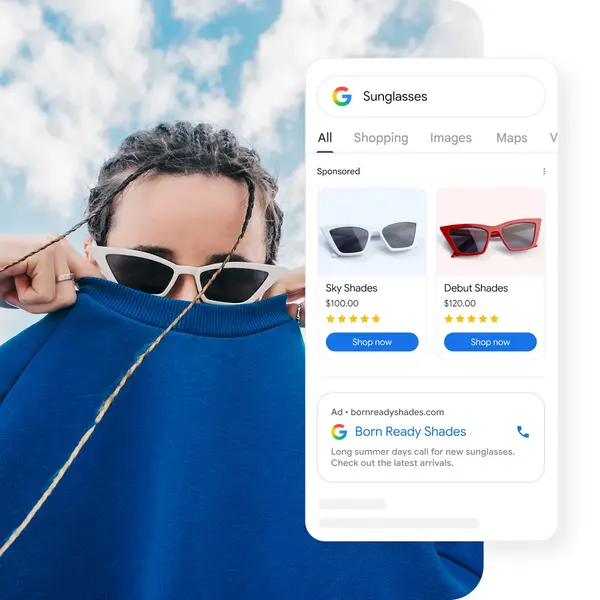
Search
Product, price and reviews before the click.
-
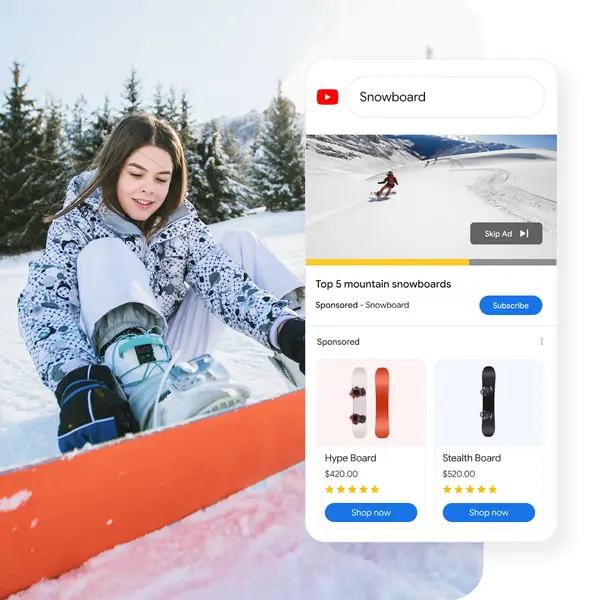
YouTube
Products under the videos they watch.
-
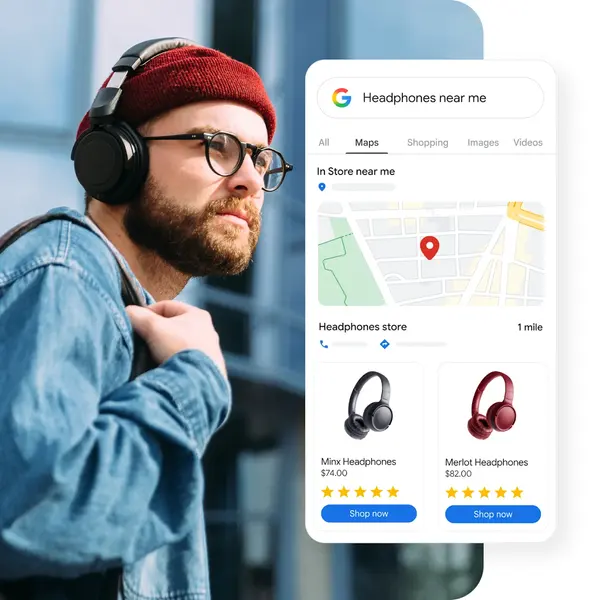
Maps
What is in stock in a store near them.
-
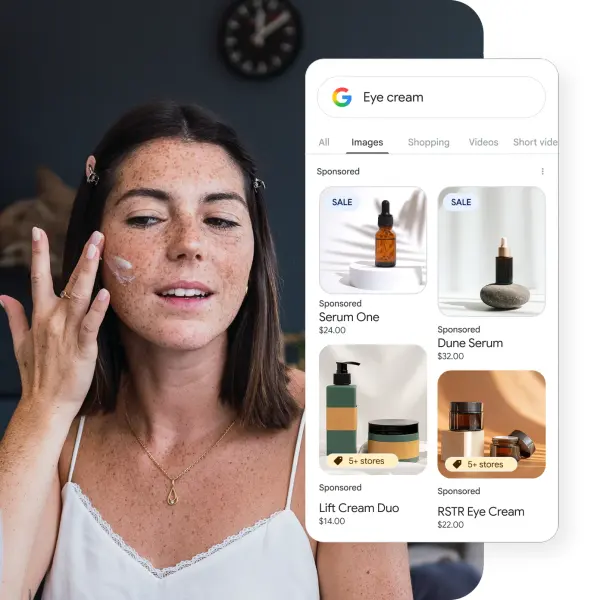
Images
Products inside the image results.


How we run Google Ads for online stores
Product visuals by Google, from Google Merchant Center. Brands shown are Google’s examples.
Ecommerce marketing services: every channel that sells, in one plan.
Most stores need more than one channel, but rarely all of them at once. Unlike a single-channel ecommerce advertising agency, we run paid ads, search and retention together, so each channel earns its place.


9:41
yourstore.com › mens › linen-shirts
Men’s Linen Shirts: Breathable, Pre-Washed
Relaxed and slim fits in 9 colors. Free returns within 30 days.
Linen Shirt Buying Comparison: Fit, Weight and Care
Fit, fabric weight and seasonal care compared by our apparel specialists.
| Title | Price | Stock | Label |
|---|---|---|---|
| Linen shirt, white, M | $48 | In stock | High margin |
| Linen shirt, sage, L | $48 | In stock | High margin |
| Canvas tote, natural | $22 | Low | Bundle |
| Summer hat, straw | $35 | Preorder | Seasonal |
Each row also carries a product ID, GTIN, brand, image and landing page.
Google Shopping and Performance Max
Shopping ads show the product, the price and your reviews before anyone clicks, so the people who tap are ready to buy. Performance Max takes the same catalog across Search, YouTube, Gmail, Maps and Display. We group products by margin and best sellers so the budget chases profit, not just revenue, and keep searches for your own brand apart so you are not paying for sales you would have made anyway.
Run by our Google Ads team, with the same catalog on Microsoft Shopping. See how we run Google Shopping ads. How we split a catalog is covered in our analysis of Performance Max feed segmentation.
Meta, TikTok and Pinterest ads
Facebook and Instagram, TikTok and Pinterest ads create demand for products people did not know they wanted yet. Catalog ads show each shopper the products they looked at, short video shows the product in use, and Pinterest reaches people who plan a purchase weeks ahead. We make the creative for the phone and start from your own photos and videos, because real content outsells polished stock.
See how we run Meta ads, Instagram ads, TikTok ads and Pinterest ads.
Amazon and marketplaces
If your products sell on Amazon, Sponsored Products, Sponsored Brands and video ads put them in front of shoppers who are already on a buying page. We plan Amazon and your own store together, so the two never bid against each other for the same customer, and new customers found on one can be won back on the other.
More on our Amazon advertising service.
Email and SMS
Welcome, abandoned cart, browse and after-purchase messages run every day without anyone pressing send, and they are where repeat revenue comes from. In Omnisend’s 2025 data, automated emails were 2% of the emails its stores sent and 30% of their email revenue. We build the flows, the signup forms and the campaign calendar around your products and seasons.
See our email and SMS marketing service, including Klaviyo and Omnisend.
SEO for product and category pages
Search engines send shoppers to category and product pages, not just to your home page. We fix the crawl and duplicate-page problems that filters and product variants create, write category and product content that answers real buying questions, and keep prices, stock and reviews accurate so your listings stay trustworthy in search.
Read our SEO services and the faceted navigation analysis.
Product feeds
The product feed is the catalog that every shopping channel reads: Google, Microsoft, Meta, Pinterest and TikTok. Clear titles, correct product identifiers, accurate prices and stock, and labels for margin and season decide where your products appear and what each click costs. We clean the feed, fix disapproved products and keep it in sync with your store.
Every field follows Google’s product data specification.
Tracking you can trust
Browser privacy settings and ad blockers hide a growing share of orders from the ad platforms. We send orders to Google, Meta and the other channels from your store’s server as well as the browser, respect each shopper’s consent choices, count every order once, and report revenue by channel from your real order data.
The method is in our guides to server-side tracking and first-party data for Meta.
Email figures: Omnisend 2026 eCommerce Marketing Report (2025 data from more than 150,000 brands), averages across Omnisend customers as published by Omnisend.

Ecommerce websites built to sell, not just to look good.
Your store is the one part of ecommerce marketing you own outright. We design and build new ecommerce websites, redesign and move existing ones, and fix what costs sales: slow pages, confusing menus, thin product pages and a long checkout. We work on Shopify, WooCommerce and other major platforms, and choose the one that fits your catalog and your team.
- New stores
- Catalog structure, product pages, payments, shipping and tax set up, with tracking and product feeds connected before launch day.
- Redesigns and platform moves
- Every old address mapped and redirected, so search rankings, links and customer accounts move with you.
- Speed
- Light pages and images sized for the phone, because shoppers leave slow stores and search engines notice.
- Product pages and checkout
- Clear photos, sizes, delivery dates and the full price early, then the shortest secure path to paid.
Building on Shopify? Work with our Shopify experts for store design and development.
Need a website that is not a store? See our web design service.
Fix it or rebuild it? We tell you honestly.
Most stores do not need a rebuild. We recommend one only when the platform itself is the limit.
Improve the store you have when
- The platform handles your catalog, payments and shipping rules
- Pages can be made fast and the checkout can be shortened
- Your team can update products without a developer
Rebuild or move platforms when
- The platform cannot do what the business needs now
- Speed or checkout limits are built into the theme or the platform
- Every change needs custom code and costs more each year

Most shoppers leave before they pay. We find out why.
Across 50 studies, the average documented cart abandonment rate is 70.22%. In Baymard’s survey of US shoppers, leaving aside people who were only browsing, 40% abandoned because extra costs such as shipping, tax and fees were too high, 20% because delivery was too slow and 19% because they did not trust the site with their card.
- 70.22%of online shopping carts are abandoned, on average.
- 8.4%higher retail conversion rates from a mobile site just 0.1 seconds faster, and retail shoppers spent 9.2% more.
- The full price, early
- Shipping, tax and fees shown on the product page or the cart, not as a surprise at the last step.
- Delivery dates, not guesses
- A clear arrival date on product pages and in checkout, by location where the platform allows.
- Trust where it counts
- Reviews, return terms and familiar payment options right where shoppers decide.
- Fewer steps
- Guest checkout, saved details and the wallets shoppers already use on their phones.
Sources: Baymard Institute, cart abandonment rate statistics (average of 50 studies, updated September 22, 2025); Milliseconds Make Millions, commissioned by Google and conducted by 55 and Deloitte (37 brand sites, more than 30 million sessions).
How it all works together.
Each channel does a different job. Run by one team, they feed each other instead of competing for credit.
- Social and video create demandMeta, TikTok, Pinterest and YouTube show your products to people who were not looking yet.
- Shopping and search catch itGoogle, Microsoft and Amazon put your products in front of people ready to buy.
- Your store converts itFast pages and a short checkout turn the visit into an order.
- Email and SMS bring them backAutomated flows turn one order into the next.
One product feed powers every shopping channel. One set of tracking counts each order once. One budget moves to whichever channel brings in profitable orders that month. That is the advantage of a full-service team: nobody is defending their own channel, and the store gets better at turning the traffic all of them send into orders. Before the busiest weeks of the year we plan all of it together, as in our holiday retail guide.
Every store is different, so every plan is too.
There is no standard ecommerce package. Four things decide where we start, and data decides where we go next.
- GoalsMore revenue, more profit, new customers or a launch.
- TimelineA holiday push or a steady year of growth.
- BudgetWhat you can put into ads and into the store.
- CompetitionWho else is bidding for the same shoppers.
- 1Audit the store and the dataTracking, product feed, speed, checkout and every channel you run today.
- 2Fix the foundationsClean tracking and a healthy feed before more money is spent.
- 3Plan the mixThe channels, budget and store changes that fit your goals.
- 4Launch and testControlled tests and weekly reviews, with waste cut quickly.
- 5Scale what is profitableMore budget only where the numbers prove it.
What ecommerce marketing has done for stores like yours.
Results published by Microsoft, Klaviyo, YouTube, Omnisend, Meta, Amazon, Pinterest, TikTok and Mailchimp. Each story shows what the store did, why it worked and how we would run the same play for you.
-

NAOMI
Read the story -

Callie’s Hot Little Biscuit
Read the story -

Bellroy
Read the story -

Silver Street Jewellers
Read the story -

Steve Madden
Read the story -

Made for Locs
Read the story -

Thirdlove
Read the story -

The Snax Lab
Read the story -

JungKwanJang
Read the story


Results as published by each platform in its advertiser and customer success stories. Results for other businesses will differ.

Built for every kind of online store.
We work with stores just starting to sell online and with established brands, with a single product line or thousands. What they share is the goal: more profitable orders and more customers who come back.
We grow online stores for direct-to-consumer brands, boutiques and apparel, jewelry stores, furniture and home decor, sporting goods and outdoor gear, supplement brands, cosmetics and skincare brands, specialty food producers, pet stores and pet brands, motorsports and performance parts, and every industry we serve.
- Direct-to-consumer brands
- Shops with a store and a website
- Amazon sellers building their own store
- Subscription and reorder products
- Food, drink and specialty goods
- Fashion, beauty and home goods
- Outdoor, sports and hobby gear
- B2B and wholesale ordering
- Local shops starting to sell online
- Brands launching their first store
Ecommerce marketing Charlotte, the Carolinas and nationwide.
Our office is in Charlotte, where our team leads ecommerce marketing Charlotte campaigns for businesses across the metro, from local shops adding online sales to established national brands. Because ecommerce websites sell everywhere, most of our work reaches customers nationwide. If you are near Charlotte, start with your town’s page; we also serve the surrounding areas and stores across the country.
Questions about ecommerce marketing.
What does an ecommerce marketing agency or ecommerce digital marketing agency do?
An ecommerce marketing agency (also called an ecommerce digital marketing agency or ecommerce agency) brings the right shoppers to an online store, helps more of them buy and brings them back for the next order. At Overtop Media Digital Marketing our ecommerce marketing services cover Google Shopping and Performance Max, Meta, TikTok and Pinterest ads, Amazon, email and SMS, SEO for product and category pages, product feeds and tracking, plus ecommerce websites built for speed and checkout conversion.
How much does ecommerce marketing cost?
There are two parts. The ad budget is paid to Google, Meta, Amazon and the other platforms, and it is sized from your goals and margins. Our work is quoted once we understand your store, because every client gets a custom plan rather than a package. The biggest cost drivers are how many channels make sense, the size of your catalog and whether the store itself needs work. Talk to us and we will show you a sensible starting point.
Do you build ecommerce websites or only work as an ecommerce advertising agency?
Both. Unlike a standalone ecommerce advertising agency that only buys clicks, our ecommerce agency designs and builds new ecommerce websites, redesigns and moves existing ones, and fixes product pages, speed and checkout. Having the same team on the store and the marketing means the pages your ads send shoppers to are built to turn them into orders.
Which store platforms do you work with?
Shopify, WooCommerce and other major platforms, connected to Google Merchant Center, Meta, Amazon, Klaviyo, Omnisend and your analytics. If your platform is holding you back we will say so, and we will say just as plainly when it is not.
Can you work on my existing store, or do I need a redesign?
Most stores do not need a rebuild. If the platform can handle your catalog, checkout and speed targets, we improve what is there and spend the rest on growth. We recommend a rebuild only when the platform itself is the limit.
Will a redesign or platform move hurt my search rankings?
Not if it is planned properly. We map every old address to its new page with permanent redirects, keep product and category content, carry reviews over where the platform allows, and watch search traffic closely after launch so any problem is fixed in days, not months.
How long until we see results?
Fixing tracking, the product feed and the biggest checkout problems often pays off in the first weeks. Paid campaigns need a learning period, so the first month or two is about clean data and finding what works. SEO and repeat-customer programs build over months.
Is return on ad spend the right number to judge success?
It is one number, not the whole picture. A high return can mean the ads only reach people who would have bought anyway. We also look at profit after ad costs, new versus returning customers and total store revenue, and where the budget allows we use controlled tests to see what the ads really added.
Do you manage Amazon ads?
Yes. We run Sponsored Products, Sponsored Brands and video ads on Amazon, and plan them with your own store so the two support each other instead of competing for the same customer.
How is ecommerce marketing different from ecommerce SEO?
Ecommerce SEO is one part of it: earning free search traffic to your product and category pages. Ecommerce marketing covers every channel that brings shoppers and sales, paid and free, plus the store and the follow-up that turns first orders into repeat customers.
How do you handle AI search?
Google says showing up in its AI features comes down to the same things as regular search: helpful, accurate pages that are easy to crawl and understand. For a store that means clear product and category pages, accurate prices and stock, and genuine reviews, which is the work we already do.
Are you a fit for smaller stores?
Yes. We work with stores that are just starting to sell online as well as established brands. With a smaller budget we start where the data says the return is fastest, often the product feed, Shopping ads and email flows, and add channels as the numbers allow.
Do you provide ecommerce marketing services outside Charlotte?
Yes. While we are known for ecommerce marketing Charlotte retailers can meet in person, online stores sell everywhere and so do we. We deliver ecommerce marketing services for stores across the Charlotte metro, the Carolinas and nationwide from our Charlotte office.
Start growing your online store.
Tell us about your store, your goals and what you have tried so far. We will show you where your next sales are most likely to come from, and what it would take.