
Key takeaways
Every step between an ad click and a paid order costs you buyers, and on a phone each step costs more. Google Merchant Center now lets stores skip one of those steps entirely. With checkout links enabled, Google can show a Buy now button on your listings, and a shopper who is ready to purchase taps it and lands in your cart with the product already added. Google reports an average 11% increase in conversion value at a similar cost per acquisition for advertisers who provide checkout URLs in Demand Gen campaigns.
Turning the setting on is the easy part. The lift comes from what surrounds it: a cart URL that works for every product and variant, a cart page that does the selling the product page used to do, tracking that records every Buy now order, and a test that proves the gain. This playbook explains how the feature works, how OVERTOP sets it up and measures it for ecommerce clients, and includes an estimator to size the opportunity for your store.
What Google Shopping Checkout Links Are, in Plain Terms
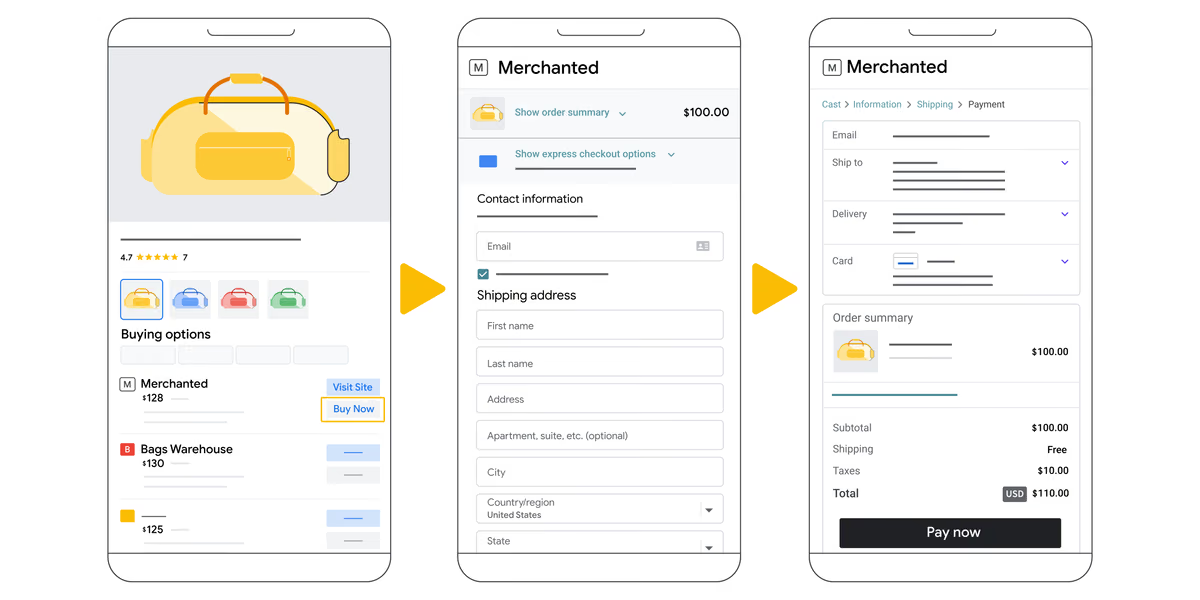
A checkout link is a URL you give Google that opens your cart or checkout page with a specific product already in it. When Google's systems judge that a shopper is ready to buy, they show a Buy now option beside your listing on mobile and tablet. The shopper skips your product page and goes straight to paying.
Your normal product page link does not go away. Shoppers who want to read reviews, compare sizes or watch a video still get the Visit site path. The checkout link is a second door, reserved for the people who have already made up their mind. According to Google's Merchant Center documentation on checkout links, the button appears only on mobile and tablet, and Google decides when to show it based on user intent, demographics and ongoing performance tests.
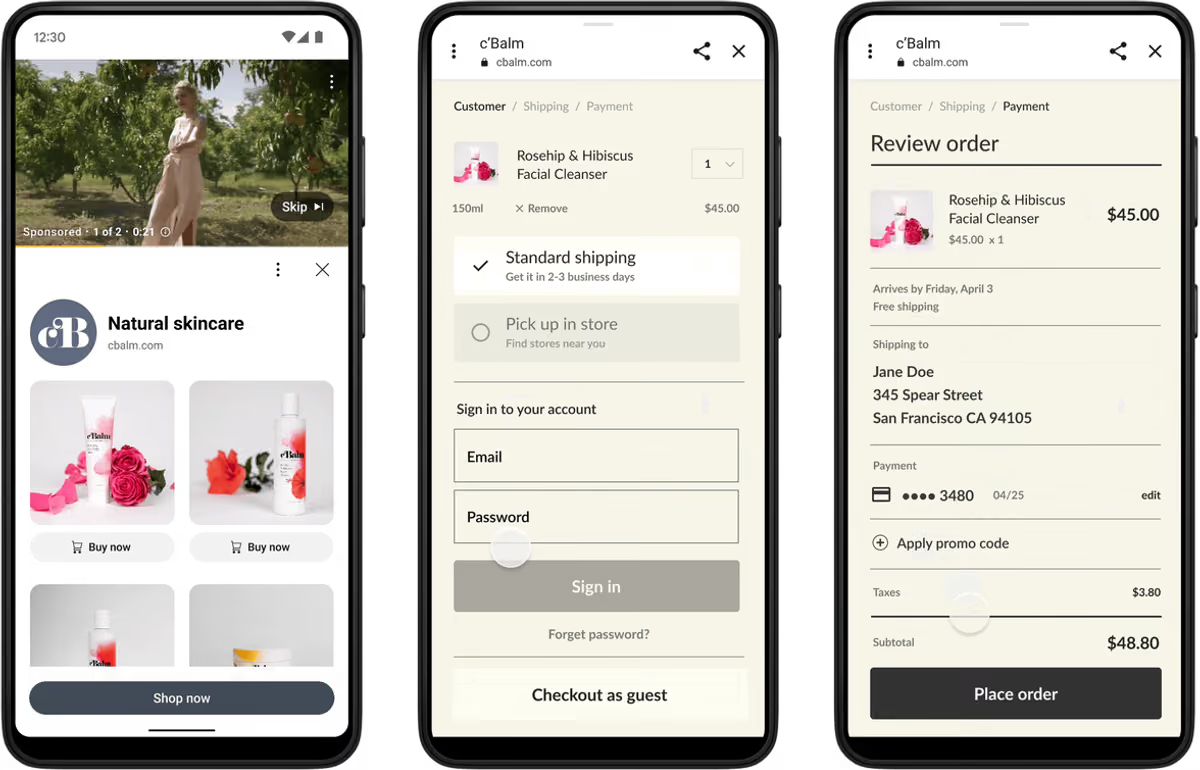
Where can it appear? Checkout links are available in 15 countries, including the United States, Canada, Great Britain, Australia, Germany, France and Japan. In the US they also extend to YouTube and Display formats, and Google's April 2025 announcement for Demand Gen campaigns confirmed the same accelerated checkout runs across Demand Gen on YouTube, Performance Max and organic shopping results.
Why One Fewer Step Is Worth Real Revenue
Most online carts never become orders. Baymard Institute's running average across 50 studies puts documented cart abandonment at roughly 70%. Every extra screen, slow page and repeated choice gives a buyer another chance to put the phone down.
Think about what the standard mobile Shopping path asks of a shopper who has already decided. They tap your ad, wait for the product page to load, scroll past the gallery, pick the size and color they already chose on Google, tap Add to cart, then open the cart. That is four or five moments of friction before checkout even starts. Baymard's cart abandonment research shows how quickly that friction adds up.
A checkout link removes most of it. Google's own numbers suggest the gain is meaningful: advertisers who provide checkout URLs see, on average, an 11% increase in conversion value at a similar cost per acquisition in Demand Gen campaigns, based on Google's US data from February 2025. For a store doing $50,000 a month in mobile ad-driven sales, a gain of that size is worth more than $60,000 a year in revenue at roughly the same ad cost.
The shopper already chose the product on Google. Making them choose it again on your site is the most expensive step in your funnel.
The catch is that the shortcut can cut both ways. Some shoppers still want the product page, and a cart page that hides shipping costs or return terms can raise abandonment instead of lowering it. That is why we treat checkout links as a feature to engineer and test, not a toggle to flip and forget.
How OVERTOP Sets Up Checkout Links for Our Clients
We roll checkout links out in five steps: confirm your store qualifies, build the right URL template for your catalog, make the cart page sell, protect your tracking, and prove the lift with a measured test. Here is what each step involves and what you get from it.
1. We confirm your store and products qualify
Google's minimum bar is simple: products must be opted into ads and comply with Shopping ads policies, and you must provide a valid checkout or cart URL. In practice, more stores fail on the details. The URL has to add the item to the cart with a plain GET request, the checkout cannot force shoppers to sign in, the URL domain must match your listings, and Google's Storebot crawler needs access to validate it, which Google rechecks on a recurring cycle that can take up to 24 hours.
We test every one of those conditions on your live store before touching Merchant Center, including what happens on mobile when a shopper arrives with an empty session. What you get: no disapproved links, no Buy now buttons that open an error or a login wall, and no wasted clicks while Google revalidates.
2. We build the right URL template for your catalog
Merchant Center offers two setup methods, and only one can be active at a time. The account-level method uses a single URL template with an {id} placeholder that Google replaces with each product's ID, for example https://www.yourstore.com/cart?productId={id}. The product-level method uses the checkout_link_template attribute in your product feed, so each product or variant can carry its own checkout URL.
Which one is right depends on your catalog. A store whose cart accepts the same product ID used in the feed can run on one account-level template. A store where a red size 10 and a blue size 8 need different cart URLs needs product-level links, built and maintained through a supplemental feed. What you get: the correct variant lands in the cart every time, so shoppers are not surprised at checkout by the wrong color or size.
| Your store | Setup we use | Why |
|---|---|---|
| One cart URL pattern works for every product ID | Account-level template in Merchant Center business info | Fastest to launch and easiest to maintain, with nothing added to the feed. |
| Variants (size, color, pack) need their own cart URLs, or only part of the catalog should get Buy now | Product-level checkout_link_template via a supplemental feed | Each variant gets a unique, correct URL, and we can include or exclude products one by one. |
| Shopify store using the Google and YouTube app | The app's checkout link settings, audited and adjusted in Merchant Center | US stores are opted in by default, so we confirm it is working well rather than just switched on. |
| Products Google crawls from your site instead of a feed | The checkoutPageURLTemplate product markup on each page | Lets crawled listings carry checkout links. Feed data still takes priority when both exist. |
3. We make your cart page do the selling
When shoppers skip the product page, everything they would have read there needs a new home. Google explicitly tells merchants to include product warnings and required disclosures on the checkout page as well as the product page. Google also recommends the checkout page clearly show your brand, the product image, quantity, price and variant, a full price breakdown, return costs and windows, shipping times and costs, any minimum order value and your free shipping threshold.
We audit your cart and checkout against that list on a real phone and fix what is missing, often with small template changes rather than a rebuild. What you get: a Buy now shopper who sees exactly what they are paying, when it will arrive and how returns work, with nothing that makes them back out to look for answers. The same improvements lift every other order that passes through your cart, not just the ones from Google.
4. We protect your tracking and bidding signals
A shortcut that breaks measurement is worse than no shortcut, because Smart Bidding then learns from fewer orders. Google advises against adding tracking parameters to the checkout URL template, so attribution has to come from properly configured conversion tracking instead. We confirm your purchase conversion fires on the order confirmation page for Buy now orders, that conversion values are accurate, and that the orders appear in both Google Ads and GA4.
Where the setup allows, we pair the rollout with enhanced conversions and server-side tracking, so privacy settings and browser limits do not hide orders from your campaigns. What you get: every extra order the button produces is counted, credited and fed back into bidding, which is how the lift compounds over time.
5. We test it and prove the lift before scaling
Google decides when to show the button and only on mobile and tablet, so a simple before and after comparison can mislead. We start with a defined slice of the catalog, compare mobile conversion value, conversion rate, cost per acquisition, cart abandonment and refund rate against a matched control set, and read the results over a full buying cycle. Because product-level links can be removed one product at a time, anything that underperforms comes out cleanly.
What you get: a clear answer, in revenue, on whether checkout links pay for your store, which product groups benefit most, and where to expand next. No guesswork, and no blanket rollout that quietly hurts high-consideration products.
Want checkout links running on your catalog? Request a Checkout Link Audit and we will tell you whether your store qualifies today and what to fix first.
Estimator: What Could Checkout Links Add for Your Store?
Check what is already true for your store, then enter your monthly Google Shopping and Performance Max spend, your return on ad spend and the share of that revenue that comes from phones and tablets. The estimator scores your readiness and sizes the opportunity using Google's reported average lift.
Checkout Link Readiness and Revenue Estimator
Built from the checks we run before enabling checkout links for a client.
Planning illustration, not a forecast. Added revenue applies Google's reported 11% average conversion value lift to your mobile and tablet ad revenue. Your result depends on your products, prices and how often Google shows the button.
Common Checkout Link Mistakes We Fix
Most checkout link problems are invisible in Merchant Center. The setting looks enabled, yet the button rarely shows, opens the wrong thing or quietly drops orders from reporting. These are the issues we find most often when we audit a store.
- Tracking parameters added to the URL template. Teams add UTM tags out of habit. Google advises against it, and it can interfere with validation. Attribution belongs in conversion tracking, not the checkout URL.
- A cart that needs a session or login. The link works when the team tests it while logged in, then fails for a first-time visitor on a phone. We always test from a clean mobile session.
- Feed IDs that do not match cart IDs. The account-level template swaps in the feed's product ID. If your cart expects a different SKU or variant ID, shoppers land in an empty or wrong cart.
- Both methods half set up. Merchant Center allows the account-level template or the product attribute, not both. Leftover settings from an earlier attempt cause confusing results.
- Storebot blocked. Bot protection or robots rules that stop Google's crawler from reaching the cart mean the links never validate.
- Disclosures left on the product page only. Age restrictions, warranty terms, subscription terms and similar notices must also appear on the cart or checkout when shoppers skip the product page.
- Judging it on desktop data. The button never appears on desktop, so blended account reports hide the effect. We read results on mobile and tablet only.
Which Products Gain the Most From Buy Now
Checkout links help most where the shopper has already decided before they reach your site. They help least where the product page is doing real persuasion that the cart cannot replace.
Strong candidates include replenishment and repeat purchases such as supplements, pet food, beauty and household goods; well-known brands and models where the shopper is choosing a store, not a product; simple products with few options; and gift purchases during peak season, when speed matters most. In our experience these products often sit in the same groups we already separate in a segmented Performance Max structure, which makes them easy to test first.
Weaker candidates are high-consideration and custom items: furniture with fabric choices, made-to-order products, technical equipment that needs a spec check, and anything where fit or compatibility questions drive returns. For those we often leave the product page as the only path, or enable checkout links on the best-selling, most-reviewed configurations only.
Where Checkout Links Fit in Your Ecommerce Growth Plan
Checkout links are one lever in a larger system. As a Charlotte digital marketing agency managing ecommerce budgets for brands across the Carolinas and beyond, we connect them to the rest of the work. Our Google Ads management runs Shopping, Performance Max and Demand Gen on revenue-tied data, and checkout links make every one of those campaigns more efficient on mobile. Our Demand Gen and YouTube playbook covers the video side, where the Buy now button turns product discovery into a purchase.
Peak season is where it matters most. Our holiday retail guide shows how we prepare feeds, budgets and creative for the busiest weeks of the year, and checkout links belong on that checklist before traffic peaks. For the organic side of the same catalog, our ecommerce SEO and conversion guide covers the product page and site improvements that lift every order.
Frequently Asked Questions About Checkout Links
What is a checkout link in Google Shopping?
A checkout link is a URL template you give Google Merchant Center that opens your cart or checkout page with the product already added. When Google decides a shopper is ready to buy, it can show a Buy now button next to your listing. One tap takes the shopper straight to your cart instead of your product page. The normal link to your product page stays in place for shoppers who want more detail.
Where do checkout links show up?
On mobile phones and tablets, not desktop. Google can show the Buy now option on Shopping ads and free product listings, in Performance Max, and on YouTube placements from Demand Gen campaigns in the US. The feature is available in 15 countries, including the US, Canada, Great Britain, Australia, Germany, France and Japan. Google decides when to show it based on how ready the shopper looks to buy.
Do checkout links actually increase sales?
Google reports that, on average, advertisers who provide checkout URLs see an 11% increase in conversion value at a similar cost per acquisition in Demand Gen campaigns, based on its own US data from February 2025. Results vary by product and store. That is why OVERTOP rolls checkout links out as a measured test, watching conversion value, cart abandonment and refunds before scaling it across the catalog.
Should I use the account-level template or the checkout_link_template attribute?
Use the account-level template when one URL pattern with the product ID works for every product, which is common on simpler stores. Use the product-level checkout_link_template attribute when variants such as size or color need their own cart URLs, or when only part of the catalog should get the button. Merchant Center allows one method at a time, so we pick the one that fits your catalog and stick with it.
Can I turn on checkout links on Shopify?
Yes. Shopify stores using the Google and YouTube app can manage checkout links in the app's product feed settings, and US merchants are opted in by default. Your storefront must be public, with no password page, and the checkout must not require shoppers to sign in. Being opted in is not the same as being set up well, so we still check tracking, disclosures and variant mapping on Shopify accounts.
Will checkout links break my conversion tracking?
They should not, as long as your conversion tags fire on the order confirmation page and you do not add tracking parameters to the checkout URL template, which Google advises against. We confirm purchases from Buy now clicks are recorded in Google Ads and GA4 before scaling, and we pair the rollout with enhanced or server-side conversions so bidding learns from every order.
Do I need an agency to set up checkout links?
Switching the setting on takes minutes. Getting a lift from it takes more: a cart URL that works for every variant, a cart page that carries the disclosures and shipping details your product page used to show, tracking that survives the shortcut, and a test that proves the result. OVERTOP is a Charlotte-based Google Partner agency that handles all of it as part of Google Shopping and Performance Max management.
Want Your Ad Clicks Landing in the Cart?
We will check whether your store and catalog qualify for checkout links today, show you what is blocking them, and map a measured rollout, from URL templates and cart page fixes to tracking and a controlled test, so you know exactly what Buy now adds to your revenue.
Research Sources
Feature details, availability, setup methods, URL requirements, validation timing and landing page recommendations come from Google Merchant Center Help, "Add a checkout link for your products," and its companion article for the Google and YouTube app on Shopify. The 11% average increase in conversion value at similar CPA comes from Google's announcement "A new accelerated checkout experience is now available for Demand Gen campaigns in the US" (April 24, 2025), citing Google internal US data from February 2025.
The checkout flow illustration and the YouTube checkout demonstration are Google product images from those pages. The 70% cart abandonment figure is Baymard Institute's average of 50 documented studies. The crawled product markup is described at schema.org. The revenue example and estimator are OVERTOP planning illustrations, not a forecast or a specific client's results.